Getting real results from a Vitamin C serum means using the right concentration, applying it correctly, and storing it properly. Be patient — visible changes take eight to twelve weeks of consistent use. Avoid common mistakes like layering with incompatible ingredients or skipping sunscreen.
To get real results from a brightening or Vitamin C serum, you must use the right concentration and formulation, apply it correctly in your routine, store it properly, and be patient for 8–12 weeks of consistent use. Avoid common pitfalls like layering with incompatible ingredients, skipping sunscreen, or expecting overnight changes.
What Your Skin Actually Needs for Brightening Results
Achieving a visibly brighter, more even complexion isn’t just about slathering on any serum. Your skin needs a combination of the right active ingredients, a consistent routine, and proper protection. The most researched brightening powerhouse is L-Ascorbic Acid, the pure form of Vitamin C. It works by inhibiting melanin production, neutralizing free radicals from UV and pollution, and boosting collagen synthesis. However, not all Vitamin C serums are created equal. The concentration matters: look for serums with 10% to 20% L-Ascorbic Acid for efficacy without excessive irritation. Lower strengths are better for beginners or sensitive skin.
Beyond Vitamin C, a well-rounded brightening routine often includes complementary ingredients. Niacinamide (Vitamin B3) helps fade dark spots and evens skin tone while strengthening the skin barrier. Kojic Acid and Azelaic Acid are also effective for pigment issues. But the key is layering these actives thoughtfully – never combine Vitamin C with strong exfoliating acids like AHAs/BHAs in the same step unless your skin is very resilient and you’ve built tolerance. Instead, use Vitamin C in the morning and exfoliants at night, or alternate days.
Another crucial factor is formulation stability. Vitamin C (especially L-Ascorbic Acid) is notoriously unstable and oxidizes quickly when exposed to light, air, or water. A good serum will come in an opaque, air-tight bottle and may contain stabilizers like Ferulic Acid and Vitamin E. These antioxidants not only stabilize the C but also boost its photoprotective benefits. If your serum turns yellow or brown, it has oxidized and will be less effective. Store it in a cool, dark place, and consider refrigerating it to prolong its life.
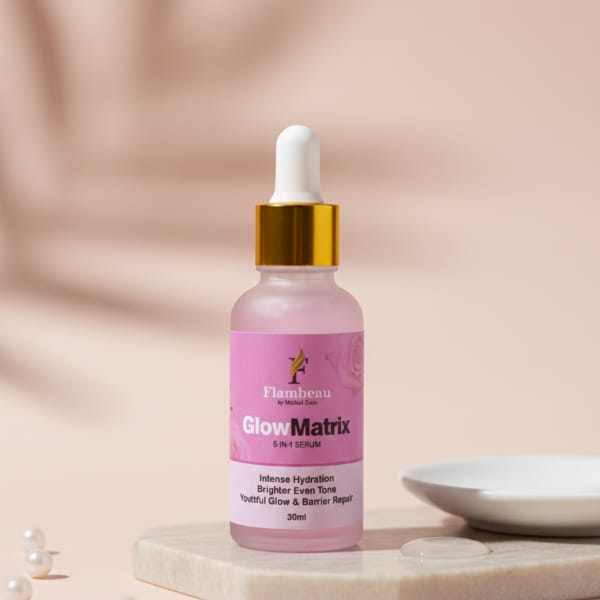
For Pakistani skin, which often faces a mix of heat, humidity, and pollution, a lightweight, non-greasy vitamin C serum is ideal. Our local climate can make heavy formulations feel sticky. The Glow Matrix 5-in-1 Serum 30ml | Flambeauty is a great example – it combines Vitamin C with other brightening agents like Niacinamide and Kojic Acid in a water-light texture that suits our weather. It also includes Hyaluronic Acid for hydration, which is essential because a well-hydrated skin barrier absorbs actives better and heals faster.
Finally, remember that brightening is a process, not an event. Skin cell turnover takes about 28 days for younger skin and longer as we age. You will typically start seeing subtle improvements in skin radiance after 4–6 weeks of daily use, with more noticeable fading of dark spots after 8–12 weeks. Consistency is everything – missing days will delay results. Also, your diet and lifestyle matter: antioxidants from fruits and vegetables, adequate sleep, and stress management all reflect on your skin.
Step-by-Step: How to Apply a Vitamin C Serum for Maximum Effect
Applying Vitamin C correctly can make the difference between glowing skin and wasted product. Follow this sequence for best results. Step 1: Cleanse thoroughly. Your skin must be clean and dry before applying any serum. Use a gentle, pH-balanced cleanser to remove dirt, oil, and last night’s skincare. Pat your face dry – don’t rub, as that can cause micro-irritation. Wait 1–2 minutes after cleansing to ensure your skin is completely dry; applying Vitamin C to damp skin can reduce its penetration and stability.
Step 2: Apply the serum to dry skin. Dispense 3–4 drops of your Vitamin C serum onto your fingertips, not directly onto your face (to avoid contamination). Gently press and pat the serum into your skin, starting from the center of your face and moving outward. Avoid the eye area. Do not rub vigorously – patting helps absorption without irritation. Let it absorb for 60–90 seconds until it feels tacky but not wet. This waiting period is critical because it allows the low pH of the serum to work effectively.
Step 3: Follow with a moisturizer. After the serum has absorbed, apply a hydrating moisturizer to lock in the actives and support your skin barrier. If you have oily or combination skin, choose a gel-based moisturizer; for dry skin, a cream-based one. Moisturizer also helps buffer any potential irritation from the Vitamin C. Wait another 2 minutes before the next step.
Step 4: Apply sunscreen – non-negotiable. This is the most important step. Vitamin C makes your skin more sensitive to UV, and without sunscreen, you risk reverse effects and increased pigmentation. Use a broad-spectrum SPF 30 or higher (SPF 50 is better for our strong Pakistani sun). Apply a generous amount – about a quarter teaspoon for your face and neck – and reapply every 2 hours if you’re outdoors. Mineral sunscreens with zinc oxide or titanium dioxide are often more stable and less irritating.
For your nighttime routine, you can use a different active like retinol or an AHA/BHA on alternate nights. But never layer Vitamin C with retinol or strong acids in the same session – use Vitamin C in the AM and those in the PM. If you have sensitive skin, start using Vitamin C every other day, then gradually increase to daily once your skin builds tolerance. Always patch test first on a small area like behind your ear or along your jawline before full-face application.
If you’re dealing with active acne and pigmentation simultaneously, consider the Clear Skin Acne Control Serum – Reduce Spots & Scars. It contains salicylic acid and niacinamide to treat breakouts while brightening leftover marks. Use it at night after cleansing, and keep your Vitamin C serum for the morning. This two-pronged approach can be very effective for acne-prone skin.

Common Mistakes That Sabotage Your Results
Many people give up on Vitamin C serums because they don’t see results, often due to easily avoidable errors. One of the biggest mistakes is using the product after it has oxidized. If your serum turns dark yellow, orange, or brown, it has lost most of its efficacy. Always check the color and smell before each use. To prevent oxidation, buy serums in opaque, airless pumps and store them away from direct sunlight and heat. Some brands even recommend refrigeration – follow the label.
Another common error is layering Vitamin C incorrectly with other actives. Mixing it with niacinamide was once thought to cause flushing, but modern formulations are stable together. However, combining Vitamin C with strong exfoliants like glycolic acid or retinol in the same routine can cause irritation, redness, and peeling. Use Vitamin C in the morning and reserve exfoliants for night, or alternate days. Also, avoid using Vitamin C right after a cleanser containing salicylic acid – the low pH overload can sting.
Skipping sunscreen is perhaps the most damaging mistake. Vitamin C is a photoprotective antioxidant, but it doesn’t replace SPF. Without sunscreen, UV exposure will undo the brightening effects and can even cause hyperpigmentation to worsen. Many Pakistani women use Vitamin C and then go outside without protection, thinking the serum itself blocks rays – it doesn’t. Always finish with a generous layer of sunscreen, and reapply if you’re out for long.
Not being patient enough is also a frequent pitfall. Brightening is a gradual process. Some people expect to see results in a week and get discouraged. But real change takes at least one full skin cycle (4–6 weeks) for luminosity and 8–12 weeks for dark spots to fade significantly. Take progress photos in consistent lighting every two weeks to track changes – our minds often don’t notice slow improvements.
Using too much product is another mistake. More is not better; 3–4 drops are sufficient for the entire face. Over-application can lead to stickiness, pilling under makeup, and potential irritation. Also, don’t skip moisturizer – some people think that because Vitamin C is in a serum, they don’t need to moisturize. But serums are water-based and won’t seal in hydration; a moisturizer is essential to maintain barrier health.
Finally, ignoring your skin type when choosing a formulation can hinder results. Oily skin types may prefer a water-based, lightweight serum, while dry skin may need a slightly richer vehicle. If you have sensitive skin, look for serums with soothing ingredients like aloe vera or madecassoside. The Glow Matrix 5-in-1 Serum is formulated to be gentle yet effective for most skin types, with added Hyaluronic Acid to prevent dryness.
What to Look for When Choosing a Brightening Serum
Not all brightening serums are equal, and knowing what to look for can save you money and frustration. First, check the active ingredient list and concentration. For Vitamin C, L-Ascorbic Acid is the gold standard. Look for a concentration between 10% and 20% – lower than 10% may be too weak, while above 20% increases irritation without extra benefit. If you have sensitive skin, start with a derivative like Sodium Ascorbyl Phosphate or Magnesium Ascorbyl Phosphate, which are gentler but still effective.
Second, examine the formulation and packaging. Vitamin C serums should be in opaque, airtight containers – avoid clear dropper bottles that expose the product to light and air. Airless pumps are ideal. Also check for the presence of stabilizers like Ferulic Acid and Vitamin E (Tocopherol), which enhance stability and efficacy. The pH should be around 3.0–3.5 for L-Ascorbic Acid to penetrate effectively; too high a pH means less absorption.
Third, consider complementary ingredients. A good brightening serum often includes more than one active. For example, Niacinamide helps fade spots and strengthens the barrier, Kojic Acid inhibits melanin, and Hyaluronic Acid provides hydration. The Glow Matrix 5-in-1 Serum combines multiple brighteners plus hyaluronic acid, making it a multitasking powerhouse. For acne-prone skin, look for serums with salicylic acid or niacinamide to address both breakouts and marks.
Fourth, avoid harmful additives. Steer clear of serums with high alcohol content (which can dry and irritate the skin), artificial fragrances, and essential oils if you have sensitive skin. Also, be wary of products that claim “instant whitening” or “dramatic results” – those are often misleading or contain banned ingredients like hydroquinone in high concentrations. Stick to reputable brands that are transparent about their formulations.
Fifth, price doesn’t always equal quality. You don’t need to spend a fortune for an effective serum. However, very cheap products may skimp on stabilization or use low-grade ingredients. For Pakistani consumers, a good mid-range option like the Glow Matrix Serum offers value without breaking the bank. If you’re on a budget, you can still get good results by focusing on a simple routine with fewer but effective products – read our guide on how to Build a Complete Skincare Routine Without Overspending.
Finally, read reviews and check for real user photos. Look for before-and-after pictures from people with similar skin type and concerns. Also, check if the brand offers samples or smaller sizes to test before committing. You can browse our full range of serums to compare options. Remember, the best serum is one that your skin tolerates well and that you will use consistently.
Adapting Your Brightening Routine for Different Skin Types
For Oily and Acne-Prone Skin
If your skin is oily, you still benefit from Vitamin C, but you need a lightweight formulation. Look for serums that are water-based, oil-free, and non-comedogenic. The Clear Skin Acne Control Serum is ideal because it combines salicylic acid for breakouts with niacinamide for brightening. Use it at night, and in the morning, apply a vitamin C serum like Glow Matrix. Always moisturize with a gel-based moisturizer and use a mattifying sunscreen. Avoid heavy creams that can clog pores.
For Dry and Dehydrated Skin
Dry skin needs extra hydration alongside brightening. Choose a Vitamin C serum that also contains Hyaluronic Acid or Glycerin to boost moisture. The Glow Matrix 5-in-1 Serum is a great fit because it includes hyaluronic acid. After applying the serum, follow with a rich moisturizer containing ceramides or shea butter. You can also layer a facial oil over your moisturizer if you need extra nourishment. Avoid alcohol-based toners or serums that can strip moisture.
For Sensitive and Reactive Skin
Sensitive skin requires extra caution. Start with a lower concentration of Vitamin C (e.g., 10% or a derivative like Ascorbyl Glucoside). Before full-face use, always patch test first and wait 24 hours. Look for serums with soothing ingredients like Aloe Vera, Allantoin, or Centella Asiatica. The Glow Matrix Serum is formulated to be gentle, but still do a patch test. Use the serum every other day initially, and if no irritation occurs, gradually increase to daily. Always buffer with a moisturizer before applying the serum if you find it too strong – apply moisturizer first, wait, then serum.
For Combination Skin
Combination skin can use most vitamin C serums, but focus on applying the serum to areas that need brightening – usually the cheeks and chin where pigmentation often appears. Avoid the T-zone if it’s very oily unless the serum is lightweight. You can use a gel moisturizer on oily parts and a cream on dry patches. Consistency across the whole face is fine as long as the serum absorbs well. The Glow Matrix Serum works well for combination skin due to its balanced texture.
How to Store Your Vitamin C Serum to Prolong Its Life
Vitamin C is notoriously unstable, and improper storage can render your serum useless within weeks. Keep it in a cool, dark place – a cabinet away from windows and heat sources is ideal. Avoid storing it in the bathroom, where humidity and temperature fluctuations accelerate oxidation. Refrigeration can extend the shelf life significantly, especially for L-Ascorbic Acid serums. If you refrigerate, let the serum warm up for a minute on your fingertips before applying to avoid shocking your skin.
Always close the cap tightly after each use. Exposure to air is a major cause of oxidation. Airless pump bottles are better than droppers because they minimize air contact. If your serum comes in a dropper bottle, avoid pumping air into it – squeeze the dropper bulb before inserting it into the bottle. Also, clean the bottle’s neck and dropper regularly to prevent product buildup that can harbor bacteria and degrade the serum.
Buy smaller bottles if you don’t use the serum daily. A 30ml bottle used once daily should last about 2–3 months. Larger bottles may oxidize before you finish them. The Glow Matrix 5-in-1 Serum 30ml is a perfect size for a 2–3 month supply. Write the date you opened it on the bottle – most vitamin C serums are best used within 3 months of opening.
Watch for signs of oxidation: a change from clear to yellow, orange, or brown, and a distinct odor that becomes stronger or unpleasant. If you notice these, it’s time to replace the serum. Using oxidized product can actually cause irritation and free radical damage instead of protection. Also, never mix your serum with other products in your hand before applying – that can destabilize it. Apply each product separately and let each absorb.
Finally, avoid exposing the bottle to direct sunlight even for short periods. If you travel, keep the serum in a dark pouch. With proper care, your vitamin C serum will stay effective throughout its lifespan, ensuring you get the brightening results you’re working toward.
Frequently Asked Questions
How long does it take for a Vitamin C serum to show results?
You may notice increased radiance in 4–6 weeks, while dark spots and hyperpigmentation typically fade after 8–12 weeks of consistent daily use.
Can I use Vitamin C serum with niacinamide?
Yes, modern formulations are stable together. Many brightening serums, like the Glow Matrix 5-in-1 Serum, combine both ingredients effectively.
What percentage of Vitamin C should a beginner use?
Beginners should start with 10% L-Ascorbic Acid or a gentler derivative like Sodium Ascorbyl Phosphate, then gradually increase to 15–20% as tolerance builds.
Why did my Vitamin C serum turn yellow?
Yellowing indicates oxidation, which reduces efficacy. Store your serum in a cool, dark place and use it within 3 months of opening. If it's dark yellow or brown, replace it.
Written by Mishal Rehman, owner of Flambeauty — sharing practical, professional beauty and skincare guidance.
Updated: July 2026