

Learn how often to change your skincare routine for healthy, glowing skin. Expert tips on when to switch products, how to introduce actives, and more.
You should change your skincare routine every 8–12 weeks for seasonal shifts, or after 4–6 weeks if a product isn’t working. Introduce one new product at a time and give it at least 4 weeks to show results. Never change everything at once unless advised by a dermatologist.
Why Your Skin’s Needs Change Over Time
Your skin is a living organ, not a static canvas. Its needs shift with the seasons, your age, your stress levels, hormonal fluctuations, and even the environment you live in. In Pakistan, for example, summers are hot and humid in cities like Karachi and Lahore, while winters in Islamabad can be dry and chilly. Your skin’s oil production and hydration levels respond to these changes, so a routine that worked perfectly in January might feel too heavy or too light by July. Understanding this natural ebb and flow is the first step to knowing when to tweak your regimen.
Beyond climate, internal factors play a huge role. As you age, your skin produces less sebum and collagen, leading to dryness and fine lines. Hormonal changes—whether from menstruation, pregnancy, or menopause—can trigger acne, sensitivity, or hyperpigmentation. Even your lifestyle matters: a stressful work deadline can increase cortisol, which may lead to breakouts or dullness. Your routine should be flexible enough to adapt to these shifts, not a rigid set of steps you follow blindly.
Another key point: skin cell turnover slows down as we age. In your 20s, your skin might bounce back quickly from a late night, but in your 40s, it needs more support. This means the ingredients that worked for you at 25—like strong exfoliants—might be too harsh at 45. Listening to your skin is more important than following a trend. If you notice persistent dryness, oiliness, or irritation, that’s a signal to reassess your products.
Finally, remember that your skin has a barrier—the stratum corneum—that protects against water loss and irritants. When this barrier is compromised, you may experience redness, itching, or breakouts. Over-washing, over-exfoliating, or using too many actives can damage it. If you suspect barrier damage, check out our guide on Damaged Skin Barrier: 7 Signs & How to Repair It Fast. The takeaway: your routine should evolve with your skin, not against it.
Signs It’s Time to Change Your Skincare Routine
How do you know when to switch things up? Your skin will tell you. One of the clearest signs is a sudden change in texture or tone. If your skin feels rough, looks dull, or has new patches of dryness or oiliness that weren’t there before, it’s likely time to adjust. For instance, if your usual moisturizer suddenly feels insufficient in winter, you might need a richer cream. Conversely, if you’re oily in summer, a lightweight gel might work better.
Persistent breakouts or irritation are red flags. If you’ve been using a product for several weeks and your acne is getting worse, not better, it’s probably not the right fit. But be careful: some ingredients, like retinoids, can cause a temporary purge—a period where breakouts worsen before improving. This typically lasts 4–6 weeks. If it persists beyond that, consult a dermatologist. Similarly, if you experience redness, stinging, or itching, your skin is telling you to stop. Never ignore irritation in hopes it will go away; it often signals a compromised barrier.
Seasonal changes are another trigger. As the weather shifts, so should your products. In Pakistan, the monsoon season brings humidity, which can make skin oilier, while winter’s dry air calls for heavier moisturizers. You might also need to adjust your sunscreen: a mattifying formula for summer and a hydrating one for winter. Think of your routine as a wardrobe—you wouldn’t wear a winter coat in June.
Life events also matter. If you move to a new city with different water hardness or pollution levels, your skin may react. Travel, illness, or increased stress can all necessitate a change. And as you age, your skin’s needs evolve; what worked at 30 may not at 40. Keep a skin diary to track patterns—it helps you pinpoint what’s working and what isn’t.
How to Introduce New Products Without Wrecking Your Skin
When you decide to change your routine, do it gradually. The golden rule is: introduce one new product at a time, and wait at least 4 weeks before adding another. This gives you time to see if the product works and to identify any adverse reactions. If you start three new products at once and have a breakout, you won’t know which one caused it. Patience is key.
Start with a patch test. Apply a small amount of the new product behind your ear or on your inner forearm, and wait 24–48 hours. If no reaction occurs, proceed to test on your face. Begin with a low frequency—once or twice a week—and gradually increase to daily use as your skin tolerates it. This is especially important for active ingredients like retinol, vitamin C, and exfoliating acids. Always patch test first, even if you’ve used similar products before.
Pay attention to how the new product interacts with your existing routine. Some ingredients don’t play well together—like retinol and benzoyl peroxide, or vitamin C and niacinamide (though the latter is debatable). If you’re unsure, consult a dermatologist or do a quick search. Also, consider the order of application: typically, you apply products from thinnest to thickest consistency. A new serum goes after cleansing and toning, before moisturizer.
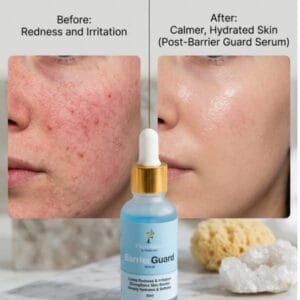
If you’re replacing a product, phase out the old one as you phase in the new. For example, if you’re switching moisturizers, use the old one in the morning and the new one at night for a few days, then switch entirely. This minimizes shock to your skin. And if you’re introducing a strong active, like a Barrier Guard Serum 30ml | Skin Barrier Repair, pair it with a gentle moisturizer to support your barrier.
Building a Flexible Routine: Step-by-Step
Creating a routine that can adapt to your skin’s changing needs is both an art and a science. Start by identifying your core steps: cleanse, treat, moisturize, and protect (sunscreen). These are non-negotiable. Then, add extras like exfoliation, masks, or eye creams based on your concerns. The key is to have a baseline routine that works, and then tweak as needed.
Step 1: Assess your skin’s current state. Is it dry, oily, combination, sensitive, or acne-prone? This determines the types of products you need. For example, dry skin benefits from creamy cleansers and rich moisturizers, while oily skin prefers foaming cleansers and lightweight gels. If you’re unsure, our Skin Care category has products for various concerns.
Step 2: Choose a gentle cleanser. Avoid harsh sulfates that strip your skin. Look for ingredients like glycerin, ceramides, or hyaluronic acid. Cleanse twice daily—morning and night—unless your skin is very dry, in which case a water rinse in the morning may suffice.
Step 3: Add a treatment serum. This is where you target specific concerns: brightening with vitamin C, anti-aging with retinol, or hydration with hyaluronic acid. Introduce one at a time, as discussed. A product like Flambeauty Pure Steam-Distilled Rose Water – 120ml can be used as a soothing toner before serums.

Step 4: Moisturize. Even oily skin needs moisture. Choose a formula that suits your skin type—creams for dry, lotions for normal, gels for oily. Look for ceramides, fatty acids, and cholesterol to support the barrier.
Step 5: Apply sunscreen every morning. This is the most important anti-aging step. Use a broad-spectrum SPF 30 or higher, and reapply every two hours if outdoors. In Pakistan, where sun exposure can be intense, this is crucial. For more on skin basics, the American Academy of Dermatology offers excellent guidelines.
Step 6: Exfoliate 1–3 times a week. Chemical exfoliants like AHAs and BHAs are generally gentler than scrubs. Start with once a week and increase if tolerated. Over-exfoliating can damage the barrier, so moderation is key.
Step 7: Adjust seasonally. In winter, add a facial oil or a thicker moisturizer. In summer, switch to lighter textures and increase sunscreen reapplication. Keep a journal to track what works.
Common Mistakes to Avoid When Changing Your Routine
Even with the best intentions, it’s easy to fall into traps. One major mistake is changing too many products at once. As mentioned, this makes it impossible to identify what’s helping or harming. Slow and steady wins the race. Another mistake is giving up too soon. Skincare products need time—usually 4–6 weeks for cell turnover, and up to 12 weeks for anti-aging effects. If you quit after a week, you might miss out on results.
Over-exfoliating is another common pitfall. Using acids or scrubs daily can strip your skin, leading to redness, sensitivity, and even more breakouts. Stick to 1–3 times a week unless your dermatologist advises otherwise. Similarly, using too many actives—like retinol, vitamin C, and AHAs all at once—can overwhelm your skin. Introduce one, let your skin adjust, then consider adding another if needed.
Ignoring the importance of sunscreen is a big no-no. If you’re using brightening or anti-aging products, sun exposure can undo your progress. Sunscreen is non-negotiable, even on cloudy days. Also, don’t neglect your neck and hands—they show signs of aging too.
Another mistake is not considering your skin’s barrier. If you’re constantly red or irritated, you might be using too many harsh products. Simplify your routine to cleanse, moisturize, and protect, and consider adding barrier-repairing ingredients like ceramides and niacinamide. Our Barrier Guard Serum is designed for this purpose. Lastly, don’t compare your skin to others—what works for your friend may not work for you. Genetics, environment, and lifestyle all play a role.
Adapting Your Routine for Different Skin Types
Your skin type dictates how often and what you should change. Here’s a breakdown for common types:
Dry Skin
Dry skin lacks oil and often needs richer moisturizers. In winter, you may need to switch to a cream cleanser and add a facial oil. In summer, a lighter lotion might suffice. Look for ingredients like hyaluronic acid, glycerin, and ceramides. Change your moisturizer seasonally, and avoid foaming cleansers that can further dry you out.
Oily Skin
Oily skin produces excess sebum, especially in humid climates. You might need to change your routine more often—switching to a gel moisturizer in summer and a lightweight lotion in winter. Use salicylic acid to keep pores clear, but don’t over-wash, as that can trigger more oil production. Blotting papers and mattifying primers can help during the day.
Combination Skin
Combination skin is tricky—oily in the T-zone, dry on cheeks. You may need to use different products for different areas. For example, a gel moisturizer on your T-zone and a cream on your cheeks. Change products based on which area is acting up. Multi-masking is your friend—use a clay mask on oily areas and a hydrating mask on dry areas.
Sensitive Skin
Sensitive skin reacts easily to new products. Introduce changes very slowly, and patch test everything. Avoid fragrances and alcohol. Stick to minimal ingredients and gentle formulas. Less is more—a simple routine of cleanser, moisturizer, and sunscreen is often best. If you react, stop immediately and consult a dermatologist.
Acne-Prone Skin
Acne-prone skin requires consistency. Changing products too often can cause flare-ups. Stick with a routine for at least 8 weeks before evaluating. Use non-comedogenic products and introduce actives like benzoyl peroxide or retinoids gradually. Don’t pick or pop—it worsens inflammation. If acne persists, see a dermatologist.
Remember, these are general guidelines. Your skin is unique, so adjust based on its feedback. For more personalized advice, explore our blog archive.
When to Seek Professional Help
Sometimes, DIY adjustments aren’t enough. If you have severe acne, rosacea, eczema, or persistent skin issues, consult a dermatologist. They can prescribe stronger treatments and help you build a routine that works. Also, if you notice sudden changes like a new mole or persistent rash, get it checked. Your skin health is worth professional attention.
In conclusion, your skincare routine should be as dynamic as your skin. Change it when your skin signals a need, introduce new products gradually, and always prioritize barrier health. With patience and observation, you’ll find what works for you.
Frequently Asked Questions
How long should I wait before changing my skincare routine?
Give a new routine at least 4–6 weeks to see results, as skin cell turnover takes about that long. For anti-aging or hyperpigmentation, wait up to 12 weeks.
Can I change multiple products at once?
No, it's best to introduce one new product at a time and wait 4 weeks before adding another. This helps you identify what works and what causes irritation.
What are signs that I need to change my routine?
Persistent dryness, oiliness, breakouts, redness, or a product no longer feeling effective are signs. Also, seasonal changes or life events like moving to a new climate may require adjustments.
Should I change my routine for winter and summer?
Yes, many people need lighter moisturizers in summer and richer ones in winter. You may also need to adjust sunscreen and exfoliation frequency based on humidity and sun exposure.
Written by Mishal Rehman, owner of Flambeauty — sharing practical, professional beauty and skincare guidance.
Updated: September 2026