Learn how herbal remedies like aloe vera, chamomile and green tea can calm sunburned skin, plus a gentle routine and mistakes to avoid for faster recovery.
Herbal remedies such as cooled aloe vera gel, chamomile compresses, green tea rinses, oatmeal baths and calendula creams can calm sunburned skin by cooling heat, reducing redness and supporting the skin’s natural repair. Apply them gently to clean, cooled skin, keep the area hydrated, and drink plenty of water while your skin heals.
Why Sunburned Skin Needs Gentler Care Than You Think
Sunburn is more than a surface problem. When ultraviolet rays hit your skin, they damage the DNA inside skin cells and trigger an inflammatory response that shows up as redness, heat, tenderness and sometimes swelling. That inflammation is the reason sunburned skin feels hot to the touch and why it can sting for days rather than hours. Understanding this helps you choose remedies that genuinely calm the skin instead of ones that simply feel nice for a minute.
Because the skin’s outer barrier is temporarily weakened after sun exposure, it loses moisture faster than usual. This is why sunburned skin often looks tight, flaky and dull a few days later. Your main goals after sunburn are cooling, calming, rehydrating and protecting – not exfoliating or treating it like a normal skincare day. Anything that strips or scrubs will make the recovery slower and more uncomfortable.
It is also worth knowing when sunburn needs more than home care. If you have blistering over a large area, fever, chills, dizziness or severe pain, that is a sign to seek medical attention rather than reach for another herbal compress. For ordinary pink-to-red sunburn without blisters, though, gentle herbal remedies can make a real difference to how your skin feels while it repairs itself.
The general skin care guidance from the American Academy of Dermatology is a useful reminder here: gentle cleansing, moisturising and sun protection form the backbone of healthy skin, and that principle applies even more strongly to skin that is already irritated. If you want more everyday skin habits that support your skin over time, our post on 5 simple morning habits for healthier skin over time is a good companion read.
The Best Herbal Ingredients for Soothing Sunburn
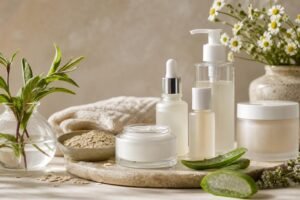
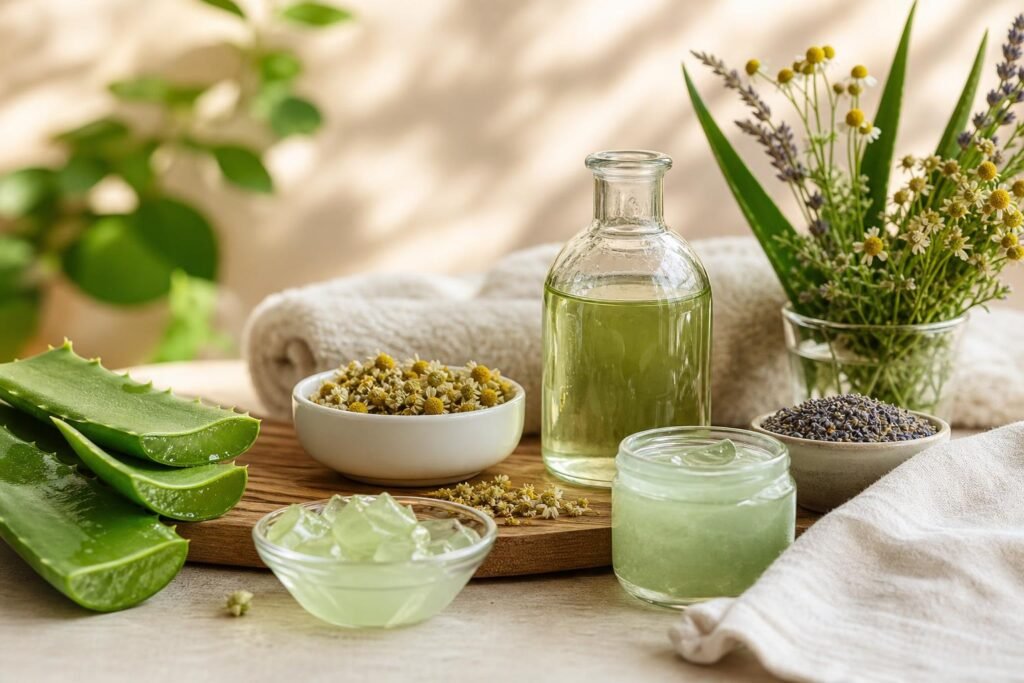
Aloe vera is the most familiar herbal remedy for sunburn, and for good reason. The gel inside the leaf is roughly 96% water and contains compounds that feel cooling on contact while helping to hold moisture against the skin. If you have an aloe plant at home, cut a lower leaf, rinse it, slice it open and scoop out the clear inner gel. Avoid the yellow latex just under the skin, which can irritate. If you buy a gel, look for one with aloe near the top of the ingredient list rather than mostly water and fragrance.
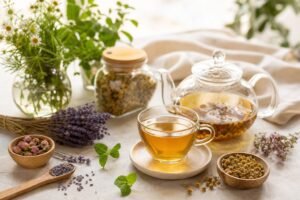
Chamomile is a gentle calming herb that works well as a cooled tea compress. Steep two chamomile tea bags in hot water for five minutes, let the liquid cool completely – ideally chill it in the fridge – then soak a soft cotton cloth and lay it over the sunburned area for ten minutes. Chamomile contains soothing compounds that help settle visible redness, and the cool temperature adds its own comfort. Repeat two or three times a day as needed.
Green tea is rich in antioxidants called polyphenols, which is why it appears in so many calming skincare formulas. Brew a strong cup, cool it, and either use it as a compress or pour it into a spray bottle for a fine mist over the shoulders, arms and face. Always patch test first on a small area of skin, especially if you are trying any new herb for the first time, since reactions are possible even to natural ingredients.
Oatmeal is another excellent option, particularly for larger areas like the back or legs. Finely ground colloidal oatmeal stirred into a cool bath creates a milky, silky soak that reduces the urge to scratch and leaves skin feeling less tight. Blend plain rolled oats in a food processor until they form a fine powder, add a cup to lukewarm – not hot – bathwater, and soak for fifteen minutes. Rinse gently and pat dry without rubbing.
Calendula, lavender and cucumber round out the herbal toolkit. Calendula is often used in creams for irritated skin, lavender diluted in a carrier oil can be calming when applied sparingly, and chilled cucumber slices or blended cucumber pulp offer a simple cooling effect. None of these replace sun protection, but together they can make the healing days far more comfortable.
A Step-by-Step Herbal Routine for Sunburn Recovery
Step one: cool the skin down. As soon as you notice sunburn, move out of the sun and take a lukewarm or cool shower – never icy cold, which can shock already stressed skin. Keep it short, around five to ten minutes, and skip harsh soaps. The goal is to lower skin temperature gradually, not to freeze it. If you cannot shower, press cool damp cloths over the hot areas for a few minutes at a time.
Step two: apply a cooling herbal remedy. While skin is still slightly damp, smooth on pure aloe vera gel or a chamomile-based compress. Damp skin absorbs and holds moisture better, so this timing matters more than people realise. Apply a generous but gentle layer – do not rub hard, just press and glide. If the area is large, a spray bottle of cooled green tea is easier and less painful to apply than a cream you have to spread.
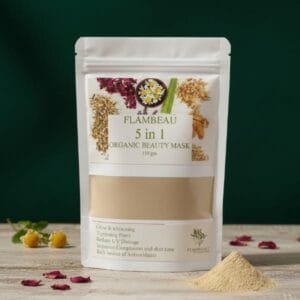
Step three: lock in moisture. Once the cooling layer has settled, follow with a simple, fragrance-free moisturiser to help seal in water. Look for ingredients like glycerin, hyaluronic acid, panthenol or shea butter. A lightweight hydrating mask can also help here – something like the 5-in-1 Organic Beauty Mask – Brighten & Hydrate Skin is designed to support hydration and a more even-looking tone, though on actively sunburned skin you should keep applications brief and gentle rather than leaving anything on for long periods.
Step four: drink water and rest. Sunburn pulls fluid toward the skin’s surface and can leave you mildly dehydrated. Drinking water steadily through the day supports your skin’s recovery from the inside, and it is one of the simplest things you can do. Avoid alcohol for a day or two, since it can worsen dehydration.
Step five: protect the healing skin. For the next week or two, treat sunburned skin as fragile. Wear loose cotton clothing over the area, stay in the shade during peak hours, and apply a broad-spectrum sunscreen of SPF 30 or higher to any exposed skin. If you wear makeup over sunscreen, our guide on how to apply sunscreen under makeup walks through the layering order so you do not irritate the skin further.
Step six: be patient with peeling. Peeling usually starts three to five days after sunburn and is a normal part of the skin shedding damaged cells. Resist the urge to pick or scrub. Keep moisturising, let the flakes fall away on their own, and your skin will look more settled within a week or two.
Common Mistakes That Slow Down Sunburn Healing
Using ice directly on the skin is one of the most common errors. It feels relieving for a moment, but extreme cold can damage already compromised skin and even cause a cold burn on top of the sunburn. Stick to cool – not freezing – compresses, and always wrap ice in a cloth if you use it at all.
Applying heavy oils or petroleum jelly too early traps heat against the skin and can make the burning sensation worse. Rich occlusive balms are better saved for the later, peeling stage when skin is dry and flaky. In the first 24 to 48 hours, lightweight water-based gels and compresses are the better choice.
Reaching for numbing creams containing benzocaine or similar ingredients is another mistake. These can irritate sensitive, damaged skin and occasionally trigger allergic reactions. If the pain is significant, a simple oral pain reliever is usually a safer route than a medicated topical, and persistent pain deserves a doctor’s advice.
Skipping sunscreen because you are already burned is understandable but counterproductive. Further UV exposure delays healing and deepens the damage. Sun protection during recovery is not optional – it is part of the treatment. Keep a broad-spectrum sunscreen within reach and reapply every two hours if you are outdoors.
Exfoliating or using active ingredients like retinol, strong acids or scrubs while the skin is healing will set you back. Even a favourite brightening serum should wait until the redness has fully faded and the skin no longer feels tender. Once you are fully healed, you can gradually reintroduce your normal routine, perhaps starting with products from our Skin Care collection.
Ignoring the warning signs is the most serious mistake of all. Blisters covering a large area, swelling of the face, nausea, confusion or a fever are signs of serious sunburn that need medical care. Herbal remedies are for mild, everyday sunburn – not for replacing proper treatment when it is needed.
How to Choose Herbal Sunburn Products Wisely
Read the ingredient list before the front label. A product called “soothing aloe gel” might contain only a small amount of aloe alongside alcohol, fragrance and colourants – all of which can sting broken or irritated skin. Look for short, recognisable ingredient lists where the herb you want appears near the top, and be wary of products that list alcohol denat high up, since it can feel drying on sunburned skin.
Fragrance is the ingredient most likely to cause trouble. Natural does not automatically mean gentle, and essential oils like citrus, peppermint and eucalyptus can be irritating on damaged skin even though they smell pleasant. If your skin is sensitive, choose fragrance-free or very lightly scented formulas during recovery and introduce scented products only once the skin has settled.
Texture matters as much as ingredients. Gels and light lotions spread easily over tender skin without dragging, while thick butters require more rubbing, which hurts. During the first few days, a pump bottle or spray is often kinder than a jar you have to scoop from with your fingers.
Check for added cooling agents. Menthol and camphor give an immediate cooling sensation, but on broken or blistered skin they can be overwhelming. A gentle aloe or oatmeal formula usually feels better than an intensely mentholated one. If you enjoy a cooling effect, chilled compresses and refrigerated gels give you that without the sting.
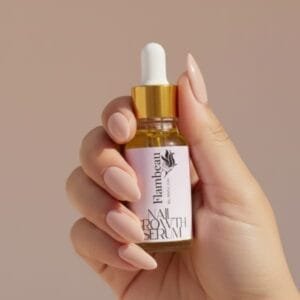
Keep after-sun care simple and consistent. You do not need ten products – a cooling gel, a fragrance-free moisturiser and a broad-spectrum sunscreen cover most of what sunburned skin needs. If you enjoy a small ritual, a brief, hydrating mask session once the worst redness has passed can be a nice way to care for your skin, alongside basics like the Nail Growth Serum – Helps Nails Grow Stronger, Healthier if you like keeping your overall grooming routine gentle and consistent while your skin recovers.
Adapting Herbal Sunburn Care to Different Skin Types
Dry skin tends to feel tight and flaky quickly after sun exposure, so layer a cooling gel with a richer moisturiser once the initial heat has passed. Shea butter, glycerin and panthenol work well here. Apply while skin is still slightly damp to trap extra moisture, and reapply through the day rather than waiting for the tight feeling to return.
Oily skin can still burn and peel, but heavy creams may feel suffocating. Choose lightweight aloe gels, green tea mists and oil-free moisturisers, and avoid occlusive balms until the peeling stage. If you are prone to breakouts, keep the routine minimal so you are not layering too many products on already stressed skin.
Combination skin often burns unevenly – the nose and cheeks may be red while the jaw feels normal. Treat each area according to how it feels rather than applying one heavy product everywhere. A gel on the oilier zones and a slightly richer moisturiser on the drier patches is a practical approach.
Sensitive skin needs the most caution. Patch test every new herb on a small area of your inner arm first, keep the routine to two or three fragrance-free products, and lean on the gentlest options like colloidal oatmeal baths and plain aloe. If your skin reacts to a remedy, stop using it immediately and let the area settle.
Acne-prone skin faces a tricky balance, since sunburn can make existing breakouts angrier while heavy after-sun products may clog pores. Stick to non-comedogenic, oil-free formulas, resist picking at any flaking skin around blemishes, and wait until the burn has fully healed before returning to any active acne treatments. When in doubt, browse more guidance in our blog archive for routines that keep skin calm without overloading it.
Frequently Asked Questions
These are the questions readers ask most often about using herbal remedies on sunburned skin, answered briefly and honestly.
Frequently Asked Questions
How often can I apply aloe vera to sunburned skin?
You can apply pure aloe vera gel two to three times a day, or more often if it feels soothing. Apply it to clean, slightly damp skin and reapply whenever the area starts to feel hot or tight again.
Is it safe to use essential oils on sunburn?
Most essential oils should be avoided on freshly sunburned skin because they can irritate or sting. If you want to use one, dilute it heavily in a carrier oil and patch test first, but gentle options like aloe, chamomile and oatmeal are usually safer choices.
How long does sunburn usually take to heal?
Mild sunburn typically fades within three to seven days, with peeling often starting around day three. More severe burns can take up to two weeks, and blistering burns should be checked by a doctor.
Should I stop my normal skincare routine while sunburned?
Yes, pause active ingredients like retinol, exfoliating acids and scrubs until the redness and tenderness have fully gone. Stick to gentle cleansing, moisturising and sunscreen, then reintroduce your usual products slowly.
Written by Mishal Rehman, owner of Flambeauty — sharing practical, professional beauty and skincare guidance.
Updated: September 2026