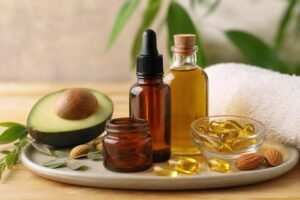
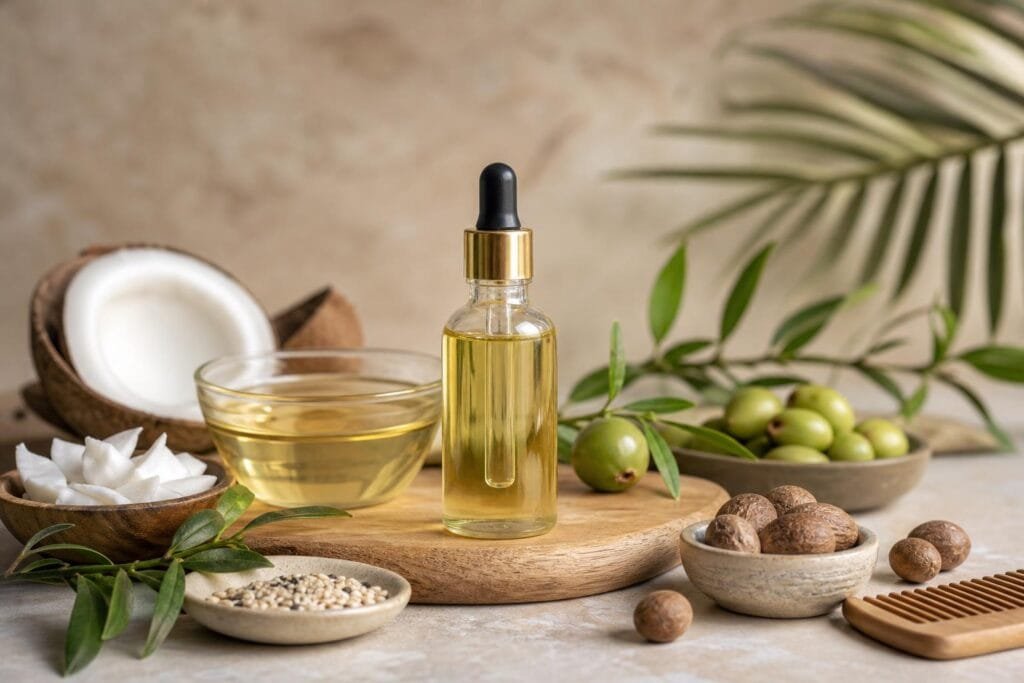
Discover the best natural oil for dandruff and dry scalp. Learn how oils like coconut, tea tree, and neem can help, plus application tips and product picks.
For dandruff and dry scalp, the best natural oil is often coconut oil for its moisturising and antimicrobial properties, or tea tree oil for its antifungal effects. Neem and jojoba oils also help. The right choice depends on whether your scalp is dry or flaky due to oiliness, and how you apply it matters as much as which oil you use.
Key takeaways
- Coconut oil and tea tree oil are among the most researched natural oils for reducing dandruff and dry scalp.
- Oils work by moisturising the scalp and, in some cases, limiting the growth of Malassezia, a yeast linked to dandruff.
- Always patch test first, and avoid applying oil to an already oily scalp if you have seborrheic dermatitis.
- For persistent or severe dandruff, see a dermatologist; oils are not a treatment for medical conditions.
- Look for cold-pressed, pure oils without added fragrance or mineral oil.
What causes dandruff and dry scalp?
Dandruff and dry scalp are different conditions, though they can feel similar. Dry scalp happens when the skin lacks moisture, leading to small, white flakes and tightness. Dandruff, on the other hand, is often linked to an overgrowth of Malassezia, a yeast that naturally lives on the scalp. This overgrowth can cause irritation, redness, and larger, greasier flakes. In Pakistan, the dry, dusty climate in cities like Karachi and Lahore can worsen dry scalp, while humid months may aggravate dandruff. Understanding which you have helps you choose the right oil. For dry scalp, moisturising oils like coconut or jojoba can restore comfort. For dandruff, oils with antimicrobial properties, such as tea tree or neem, may help reduce flaking. According to the NHS, a healthy scalp is part of overall healthy skin, and gentle care is key.
Which natural oils help with dandruff and dry scalp?
Several natural oils have properties that may help with dandruff and dry scalp. Here are the most common, with details on how they work and what to expect.
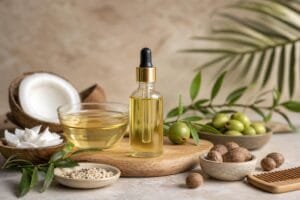
Coconut oil is rich in lauric acid, which has antimicrobial effects. It moisturises the scalp and can help with dryness. Some research suggests it may also help against Malassezia, though evidence is mixed. It is commonly used for dry scalp and mild flaking.
Tea tree oil is known for its antifungal and antibacterial properties. It may help reduce dandruff caused by yeast overgrowth. It is potent, so it should always be diluted with a carrier oil before use.
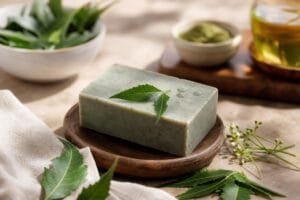
Neem oil has been used in South Asian traditions for centuries. It contains compounds that may soothe irritation and have antifungal effects. It is often used for scalp conditions, but its strong smell and thick texture mean it is best mixed with a lighter oil.
Jojoba oil is actually a liquid wax that closely resembles human sebum. It moisturises without leaving a heavy residue and is suitable for most scalp types, including oily scalps.
Almond oil is mild and nourishing, good for dry scalp. It is less likely to irritate sensitive skin.
Olive oil is moisturising but can be heavy. It may not be ideal for dandruff-prone scalps as it can feed the yeast.
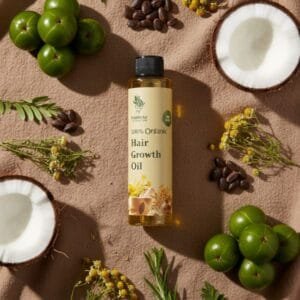
When choosing, consider your scalp type and the cause of your flaking. For a ready-made option, Flambeauty’s Hair Growth Oil – Strengthen & Nourish Hair Naturally is formulated with natural oils to support scalp health.
How do you apply natural oils for best results?
Applying oil correctly is as important as choosing the right one. Follow these steps for a safe and effective routine.
- Patch test first: Apply a small amount of diluted oil behind your ear or on your inner arm. Wait 24 hours to check for irritation.
- Start with a clean scalp. Wash your hair with a gentle shampoo to remove buildup.
- Dilute essential oils like tea tree with a carrier oil such as coconut or jojoba. A common ratio is 1 teaspoon of carrier oil to 2-3 drops of essential oil.
- Part your hair in sections and apply the oil directly to the scalp using your fingertips or a cotton ball. Massage gently in circular motions for 5-10 minutes to improve circulation.
- Leave the oil on for at least 30 minutes, or overnight for dry scalp. Use a shower cap to prevent staining pillows.
- Wash out thoroughly with a mild shampoo. You may need to shampoo twice to remove all oil.
- Repeat 1-2 times per week. Over-oiling can lead to buildup and worsen dandruff.
For a lightweight option that can be used as a leave-in treatment, consider Flambeauty’s Glow Matrix 5-in-1 Serum 30ml, which may help nourish the scalp without heaviness.

Which oil suits your scalp type?
The best oil depends on whether your scalp is dry, oily, or sensitive. Here is a breakdown.
Dry scalp
Choose moisturising oils like coconut, almond, or jojoba. These oils replenish moisture and soothe tightness. Apply 2-3 times a week for best results.
Oily scalp with dandruff
Use lightweight oils like jojoba or tea tree diluted in jojoba. Avoid heavy oils like olive or castor, which can add to greasiness. Tea tree may help control yeast overgrowth.
Sensitive scalp
Opt for fragrance-free, pure oils like almond or jojoba. Avoid essential oils unless highly diluted, and always patch test. Neem may be too strong for some.
Combination scalp
An oily scalp with dry ends is common. Use jojoba on the scalp and a richer oil like coconut on the ends. This balances moisture without weighing down roots.
Common mistakes to avoid when using oils for dandruff
Even natural oils can cause problems if used incorrectly. Here are mistakes to avoid.
- Using undiluted essential oils: Tea tree, neem, and other essential oils can burn or irritate skin. Always dilute with a carrier oil.
- Applying oil to an oily scalp: If your dandruff is caused by excess oil, adding more oil can feed the yeast and worsen flaking.
- Leaving oil on too long: Overnight is fine for dry scalp, but for dandruff, limit to 30-60 minutes to avoid buildup.
- Not washing out properly: Residual oil can clog pores and attract dirt. Shampoo thoroughly.
- Expecting instant results: Oils may take several weeks to show improvement. Be consistent but patient.
- Ignoring persistent symptoms: If dandruff does not improve or worsens, see a dermatologist. It could be a sign of a medical condition like seborrheic dermatitis.
What to look for when buying natural oils
Not all oils are created equal. Here is what to check on the label.
- Cold-pressed and unrefined: These methods preserve more nutrients and are less likely to contain chemical residues.
- Pure, single-ingredient oils: Avoid blends with added fragrance, mineral oil, or silicones, which can irritate the scalp.
- Organic certification: If possible, choose organic to reduce exposure to pesticides.
- Packaging: Dark glass bottles protect oils from light and oxidation.
- Reputable brands: Buy from trusted sources to ensure quality and purity.
For a curated selection of natural oils and serums, explore Flambeauty’s Oils & Serums category. You may also find related tips in our blog post on simple herbal tea habits for a healthier lifestyle, which covers overall wellness that can support scalp health.
When to see a dermatologist
If you have severe dandruff, redness, swelling, or flaking that does not improve with over-the-counter products, consult a dermatologist. These could be signs of conditions like seborrheic dermatitis, psoriasis, or eczema, which require medical care. Oils are cosmetic and not intended to treat such conditions. For persistent concerns, professional advice is essential.
Frequently Asked Questions
Can I use coconut oil every day for dandruff?
Using coconut oil every day may be too heavy for some scalps and could lead to buildup. For dry scalp, 2-3 times a week is usually sufficient. If you have dandruff, limit use to once or twice a week and wash out thoroughly.
Is tea tree oil effective for dandruff?
Tea tree oil has antifungal properties that may help reduce dandruff caused by yeast. It should always be diluted with a carrier oil before applying to the scalp, and a patch test is recommended to avoid irritation.
How long does it take for natural oils to reduce dandruff?
Results vary, but with consistent use, you may notice improvement in flaking and dryness within a few weeks. If there is no change after a month, or if symptoms worsen, see a dermatologist.
Can I leave oil on my scalp overnight?
For dry scalp, leaving oil on overnight can be beneficial for deep moisturising. For dandruff, it is better to limit application to 30-60 minutes to prevent excess oil from feeding the yeast. Always wash out thoroughly the next morning.
Which oil is best for an oily scalp with dandruff?
Jojoba oil is a good choice for oily scalps because it is lightweight and resembles natural sebum. Tea tree oil diluted in jojoba may also help control dandruff without adding greasiness.
Written by Mishal Rehman, owner of Flambeauty — sharing practical, professional beauty and skincare guidance.
Updated: October 2026